
What is the Calving Season in Tanzania?
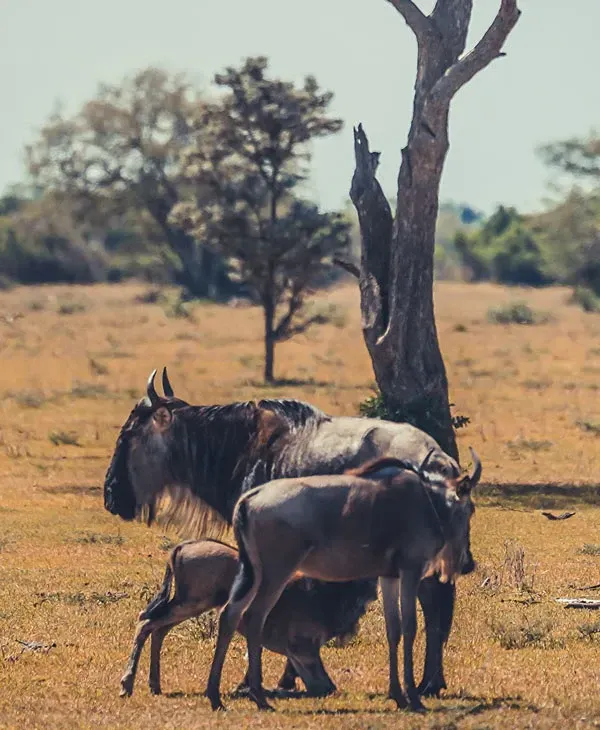
While the Mara River crossings are the most famous part of the Great Migration, the calving season is its most vital chapter. Every year, between January and March, hundreds of thousands of wildebeest congregate on the short-grass plains of the Southern Serengeti and the Ngorongoro Conservation Area to give birth.
During a peak two-week window (usually in February), approximately 8,000 wildebeest calves are born every single day. This massive influx of vulnerable young attracts Africa's top predators, creating some of the continent's most intense wildlife-viewing opportunities.
Next, let's explore why visiting during the calving season offers a unique experience.
For first-time safari-goers, the calving season offers a fundamentally different experience than the dry season (July–October).
- The Spectacle of Life: Unlike the river crossings, which are defined by struggle and panic, the calving season is a time of abundance. You will see thousands of wobbly-legged calves learning to run within minutes of birth.
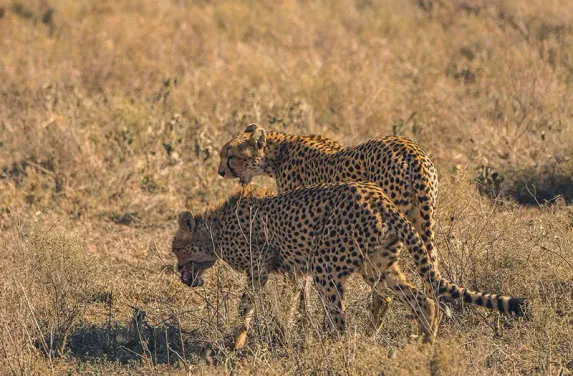
- Intense Predator Action: Because the prey is so concentrated and vulnerable, you are much more likely to witness a high-speed cheetah hunt or a pride of lions interacting with their cubs.
- Exclusivity and Lushness: The landscape is a vibrant emerald green rather than dusty brown. While Ndutu can get busy, the vastness of the southern plains often feels more private than the crowded river banks in the north.
To make the most of your safari, understanding the timing of the calving season is key.
The calving season is tied to the rains, but generally follows this calendar:
- Late December: The herds begin moving south from the Central Serengeti as the "short rains" turn the southern plains green.
- January: The herds settle into the Ndutu and Salei plains, preparing for the peak birthing period in February.
- February (Peak): This is the height of the birthing season. If you want to see a calf taking its first steps, this is the month to visit.
- March: The grass begins to dry out, and the "long rains" start. The herds begin to move toward the Western Corridor.
Best Locations for the Calving Season
Unlike the dry season, when animals stay near permanent rivers, the calving season happens in specific "short-grass" regions rich in calcium and phosphorus—perfect for lactating mothers.
A. Ndutu (Ngorongoro/Serengeti Border)
Ndutu is the undisputed capital of the calving season. It sits on the border of the Serengeti and Ngorongoro. Because it is part of the Conservation Area, off-road driving is permitted here, allowing you to get incredibly close to the action.
Calving Season Accommodation Options:
Permanent Lodges: These provide the highest level of comfort, with solid walls, swimming pools, and extensive facilities. They are ideal for families or those who prefer a "hotel-style" experience in the bush.
Mobile Tented Camps: These are the "gold standard" for the calving season. These camps are dismantled and moved twice a year to ensure they are always positioned exactly where the herds are expected to be. They offer a romantic "Out of Africa" feel with high-end luxury, including en-suite bucket showers and gourmet dining.
Seasonal Camps: Operating only during the migration months (Dec–March), these offer a middle ground between permanent structures and fully mobile operations, often featuring large walk-in tents on raised platforms.
B. The Southern Serengeti
The plains around Kusini and Matiti offer vast horizons with tens of thousands of wildebeest.
C. Olduvai Gorge & Gol Mountains
These areas provide a more rugged backdrop and are often less crowded than the central Ndutu region.
Logistics: How to Get There
Getting to the remote southern plains requires careful planning:
- International Arrival: Fly into Kilimanjaro International Airport (JRO).
- The "Fly-In" Option: The most efficient method is a bush plane from Arusha Airport (ARK) directly to the Ndutu Airstrip. This saves an 8-hour bumpy drive.
- The "Drive-In" Option: Most classic safaris drive from Arusha, stopping at Lake Manyara or Tarangire first, then heading through the Ngorongoro Highlands to reach the southern plains.
Weather: Rainfall and Photography
This period is known as the "Short Dry Season" within the "Green Season."
- Expectations: You will likely experience short, dramatic afternoon thundershowers. These usually clear quickly, leaving crisp, dust-free air behind.
- Impact on Game Drives: Heavy rain can make some black-cotton soil tracks slippery. A 4x4 vehicle is non-negotiable.
- Photography: The light after a rainstorm is spectacular—saturated colors and clear horizons make for the best Kilimanjaro and savannah shots.
Wildlife Beyond the Migration
While wildebeest are the stars, the southern plains are teeming with other species:
- Predators: Cheetahs (their prime habitat), lions, spotted hyenas, and jackals are omnipresent.
- Resident Wildlife: Large herds of zebra follow the wildebeest. You will also see giraffes in the acacia woodlands, Grant’s and Thomson’s gazelles, and eland.
- Birding: European and North African migratory birds are present in huge numbers, including flamboyant flamingos on Lake Ndutu if water levels are right.
Predator-Prey Dynamics: The "Circle of Life."
- Lions and Hyenas: These predators don't have to work hard during this time. They often wait on the periphery of the herds for an easy target.
- Cheetahs: The Southern Serengeti plains are the best place in the world to see cheetahs. The flat, open terrain allows them to use their speed to full advantage.
- Leopards: Often found in the acacia woodlands surrounding the Ndutu lakes.
Health and Safety
- Malaria: The rains bring more mosquitoes. Strict adherence to prophylactics and the use of repellent at dusk are essential.
- Tsetse Flies: While less common in the open southern plains than in the central woodlands, they can be present. Avoid wearing dark blue or black.
- Flash Floods: Occasionally, dry riverbeds (luggas) can fill quickly after a storm. Always follow your guide's lead regarding crossings.
Practical Planning Tips
- Book Early: Mobile camps in Ndutu fill up 8–12 months in advance.
- Choose a Mobile Camp: To stay as close as possible to the moving herds, book a luxury mobile tented camp.
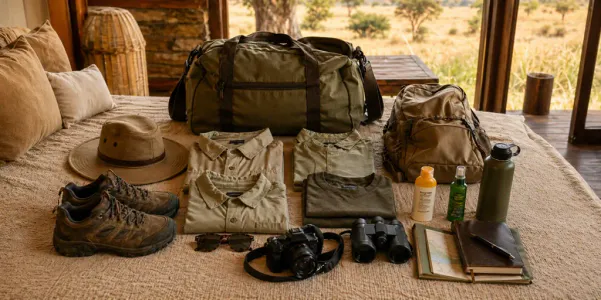
- Prepare for Rain: Pack a lightweight rain jacket and waterproof bags for your camera gear.
Summary: The Verdict
The calving season offers travelers a chance to witness the spectacle of birth and survival, with abundant wildlife and intense predator-prey interactions as hallmarks of the African bush.
.jpg_1784962360143.webp?color=cac6b6%2C908d57&width=601&height=376)

.jpg_1784965072251.webp?color=c3cbcd%2C302c10&width=601&height=376)