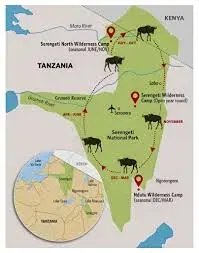
Great Serengeti Migration – Quick Answer The Great Serengeti Migration is nature's most spectacular wildlife phenomenon, involving over 2 million wildebeest, zebras, and gazelles in a continuous circular journey across Tanzania's Serengeti and Kenya's Masai Mara ecosystems. The migration follows a predictable annual pattern driven by rainfall and fresh grazing: calving season in the southern Serengeti (January–March), northward movement through central and western Serengeti (April–June), and dramatic Mara River crossings in northern Serengeti and Masai Mara (July–October), before returning south to complete the cycle. Understanding the Great Migration: Nature's Greatest Show The Great Serengeti Migration represents the world's largest terrestrial mammal migration, spanning approximately 30,000 square kilometers across the Serengeti-Mara ecosystem. This annual clockwise journey is driven by an instinctive quest for fresh grazing and water, following ancient pathways that have been etched into the landscape over millennia. The migration involves approximately 1.5 to 2 million wildebeest, accompanied by 200,000 zebras, 350,000 Thomson's gazelles, and thousands of eland and other antelope species. What makes this natural spectacle truly remarkable is its continuous year-round nature—the migration never stops. The herds are always on the move, and the key to witnessing this phenomenon lies in understanding where the animals will be during specific months and what dramatic wildlife events characterize each phase of their journey. Key Fact: The migration is not a single massive herd moving together. Instead, it consists of numerous smaller groups spread across vast areas, creating a continuous flow of wildlife across the ecosystem throughout the year. The Complete Migration Calendar: Month-by-Month Breakdown January – March: The Calving Season (Southern Serengeti – Ndutu Plains) Location: Southern Serengeti and Ndutu area within the Ngorongoro Conservation Area This is arguably the most dramatic period of the entire migration cycle. The wildebeest herds congregate on the nutrient-rich short-grass plains of the southern Serengeti, particularly in the Ndutu region, for the spectacular calving season. During this intense period, approximately 8,000 wildebeest calves are born daily, with over 400,000 calves entering the world within a concentrated three-week window in February. Wildlife Highlights: • Witness newborn wildebeest taking their first steps within minutes of birth • Intense predator activity as lions, cheetahs, leopards, and hyenas take advantage of vulnerable young • Open plains provide exceptional photography opportunities with unobstructed views • Resident wildlife including lions with large prides and cheetahs in abundance • Dramatic predator-prey interactions occur daily Insider Tip: The calving season offers some of the most spectacular predator action of the entire year. Photographers particularly favor this period for its dramatic wildlife interactions, open landscapes, and softer morning light. Accommodation prices are generally lower than the peak river crossing season, making it excellent value for money. Best For Wildlife photographers, families with children (predictable wildlife viewing), travelers seeking fewer crowds, and those interested in witnessing the circle of life in its rawest form. April – June: The Northward Trek (Central & Western Serengeti) Location: Central Serengeti (Seronera Valley) moving through to Western Corridor and Grumeti region As the southern plains dry out, the massive herds begin their northward migration, moving through the central Serengeti's Seronera Valley before fanning out across the Western Corridor. This period is characterized by the "long rains" or "Green Season," when the landscape transforms into lush, verdant scenery with dramatic storm clouds and spectacular light for photography. Wildlife Highlights: • Early Grumeti River crossings (May-June), though less dramatic than Mara crossings • Excellent leopard viewing in the Seronera Valley's riverine forests • Massive wildebeest herds form long columns stretching to the horizon • Outstanding birdwatching with hundreds of migratory species present • Lush green landscapes provide stunning photographic backdrops • The Western Corridor offers dramatic kopjes (rocky outcrops) frequented by big cats The Green Season Advantage: April through June represents the "shoulder season" with significantly lower accommodation rates (often 30-40% cheaper), fewer tourists, and breathtakingly beautiful landscapes. While occasional afternoon rains occur, they rarely disrupt game viewing and create spectacular photographic conditions. Best For: Budget-conscious travelers, photographers seeking dramatic landscapes and storm light, those wanting to avoid crowds, and wildlife enthusiasts interested in resident species alongside the migration. July – October: The Dramatic River Crossings (Northern Serengeti & Masai Mara) Location: Northern Serengeti (Tanzania) and Masai Mara National Reserve (Kenya) This is the most famous and sought-after phase of the migration—the period of the legendary Mara River crossings. As the herds move north into the Kogatende region of northern Serengeti and across the border into Kenya's Masai Mara, they must navigate the treacherous waters of the Mara River, home to massive Nile crocodiles that can reach over 5 meters in length. Wildlife Highlights: • The iconic Mara River crossings—nature's most dramatic spectacle • Thousands of wildebeest and zebras plunging into crocodile-infested waters • Intense predator concentrations: lions, leopards, cheetahs, hyenas, and wild dogs • Multiple crossing points along the Mara River system • Peak concentration of wildlife in northern regions • Exceptional opportunities to witness survival instincts and herd behavior Important Reality Check: River crossings are NEVER guaranteed. They are spontaneous, unpredictable events influenced by weather patterns, water levels, predator presence, and complex herd dynamics. Wildebeest may gather at the riverbank for hours or even days before attempting a crossing—or may retreat without crossing at all. Even during peak season, you might witness multiple crossings or none at all. This unpredictability is part of what makes the experience so thrilling when it does happen. Best For: First-time safari-goers seeking the iconic African experience, wildlife enthusiasts prioritizing dramatic action, and travelers willing to invest premium prices for the chance (not guarantee) to witness river crossings. Pro Strategy: For the best chance of witnessing a crossing, plan a minimum 4-5 night stay in the northern Serengeti or Masai Mara. Book accommodations close to the river (properties like Singita Mara River Tented Camp, Lamai Serengeti, or Kichwa Tembo Camp). Balance your time between camping out at the river and conducting general game drives to maximize wildlife encounters regardless of crossing activity. November – December: The Return Journey (Eastern Serengeti) Location: Eastern Serengeti and Lobo area, transitioning back toward the southern plains Following the onset of the short rains in late October and November, the herds begin their southward return journey. They move through the less-visited eastern and Lobo regions of the Serengeti, eventually making their way back to the southern plains where the cycle will begin anew with the next calving season. Wildlife Highlights: • Excellent wildlife viewing in the underrated Lobo area • Significantly fewer tourists compared to peak season • Herds dispersed across eastern Serengeti offering diverse viewing opportunities • Green landscapes begin to emerge after the short rains • Strong resident wildlife populations, especially in central Serengeti Best For: Travelers seeking solitude, those interested in exploring lesser-known Serengeti regions, and visitors who want to experience the migration without peak season crowds and prices.

All guides
Masai Mara National Reserve Tanzania
The Great Serengeti Migration Guide 2026-2027: Complete Planning Resource.
Witness the world's largest wildlife migration! The Great Serengeti Migration 2026-2027 features over 2 million wildebeest crossing rivers, calving in Tanzania, and dramatic Mara River scenes. Plan your unforgettable African adventure now!
M
Maasai Guides DMC
Feb 15, 2026
Ready to plan your Tanzania safari?
Explore a variety of safari packages and compare trusted tour operators to find the perfect Tanzania safari for your next adventure.
Related guides
.jpg_1784962360143.webp?color=cac6b6%2C908d57&width=601&height=376) Mt Kenya National Park
Mt Kenya National ParkThe Great Migration: Nature’s Greatest Wildlife Journey

rafikitembotours
.jpg_1784965072251.webp?color=c3cbcd%2C302c10&width=601&height=376) Hell's Gate National Park
Hell's Gate National ParkNgorongoro Crater: Africa’s Natural Wildlife Sanctuary
rafikitembotours
 Gombe National Park
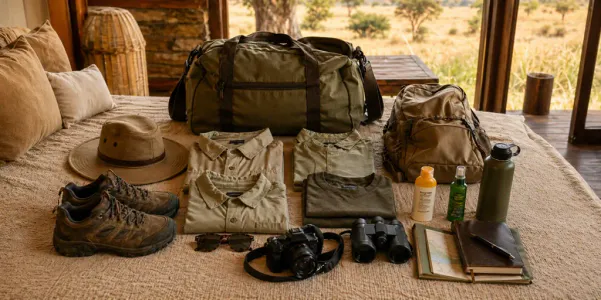
Packing for the Wild: Your Tanzania Safari Essentials
rafikitembotours
 Mt Kenya National Park
SAFARI IS MORE THAN SEEING THE BIG FIVE
rafikitembotours
 Gombe National Park
5 THINGS TRAVELERS SHOULD CHECK BEFORE BOOKING ANY TANZANIA TOUR
rafikitembotours
 Mt Kenya National Park
WHY SEPTEMBER IS ONE OF THE BEST MONTH TO TRAVEL IN TANZANIA AND KENYA
rafikitembotours