

Kenya ranks among the top wildlife destinations globally., boasting a diverse array of ecosystems—from the rolling grasslands of the Maasai Mara to the arid scrublands of Samburu and even the deep waters of the Indian Ocean.
1. The Iconic "Big Five."
Originally a hunting term for the five most dangerous animals to track on foot, these are now the most sought-after sightings for photographers.
- Lion: Commonly seen in the Maasai Mara and Tsavo. Prides often rest under acacia trees.
- Leopard: Elusive and often found over tree branches in Samburu or Lake Nakuru.
- African Elephant: Amboseli National Park provides excellent sightings, with Mt. Kilimanjaro in the background.
- Cape Buffalo: Powerful animals found in large herds throughout most Kenyan parks.
- Rhino: Both Black and White rhinos can be seen; Ol Pejeta Conservancy and Lake Nakuru are recommended.
2. The Elusive & Rare (African Wild Dog)
The African Wild Dog (or Painted Wolf) is one of Africa’s most endangered carnivores. They were omitted from common lists because they are incredibly rare, but Kenya is a stronghold for them.
- Where to find them: Best seen in Laikipia and Tsavo. Because they cover massive distances daily, sightings are never guaranteed, making a wild dog encounter a "holy grail" for safari-goers.
3. The "Marine Big Five" (Whales)
Many travelers forget that Kenya has a tropical coastline. Between July and September, the Indian Ocean becomes a theater for giants.
- Humpback Whales: These massive mammals migrate from Antarctica to the warm waters of Watamu and Lammu to breed. You can take boat safaris to see them breaching.
- Whale Sharks: The world's largest fish can also be spotted near Diani Beach, particularly between November and February.
4. Primates & Chimpanzees
While Kenya is famous for baboons and colobus monkeys, Chimpanzees are not actually native to Kenya; they are naturally found further west in the Congo and Uganda.
- The Exception: The Sweetwaters Chimpanzee Sanctuary at Ol Pejeta. Established with the Jane Goodall Institute, it provides a home for orphaned and rescued chimps. It is the only place in Kenya where you can see these primates.
5. The Samburu "Special Five."
In Northern Kenya, the arid climate has led to the evolution of unique species:
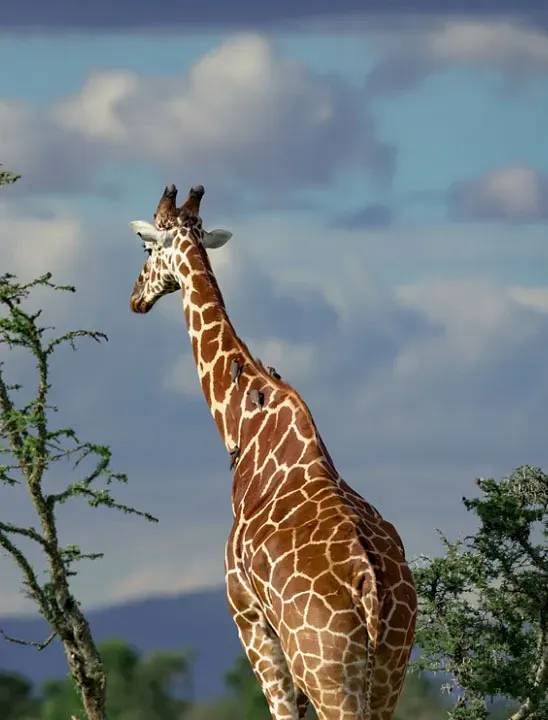
- Reticulated Giraffe: Liver-colored geometric patterns.
- Grevy’s Zebra: This species is larger with thinner stripes and rounded ears.
- Somali Ostrich: Noted for its blue-grey skin.
- Beisa Oryx: Antelope with long, straight horns.
- Gerenuk: Rises up on its back legs to browse leaves from tall branches.
6. The Great Migration
If you visit between July and October, the Maasai Mara is dominated by:
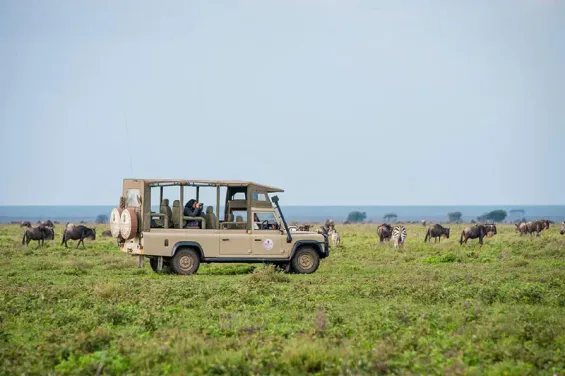
- Wildebeest: Over 1.5 million trek from the Serengeti into the Mara.
- Nile Crocodile: Massive reptiles that lie in wait at the river crossings.
SafariGo Tip for Travelers
Because some species, like the Wild Dog or Humpback Whale, are seasonal or region-specific, it is important to plan your itinerary carefully.
How to see them:
1. Time your visit: For whales, go to the coast in August. For the migration, aim for the Mara in September.
2. Specialized Operators: Use our platform to find operators who specialize in "Marine Safaris" or "Wild Dog Tracking" in Laikipia to increase your chances of a sighting.
.jpg_1784962360143.webp?color=cac6b6%2C908d57&width=601&height=376)

.jpg_1784965072251.webp?color=c3cbcd%2C302c10&width=601&height=376)