
Great Wildebeest Migration FAQ (2026–2027)
The Great Wildebeest Migration raises many practical questions — especially around timing, river crossings, and trip planning.
This FAQ answers the most common migration questions using real-world safari conditions in the Serengeti and Masai Mara.
What is the Great Wildebeest Migration?
The migration spans multiple ecosystems across Tanzania and Kenya, with timing and location changing throughout the year.
The Great Wildebeest Migration is the world’s largest land-based wildlife movement.
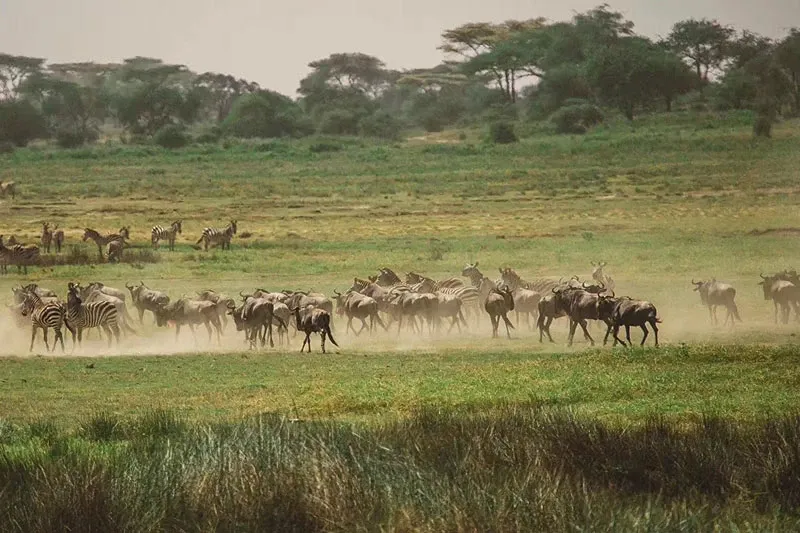
Each year, more than two million wildebeest, zebras, and gazelles move in a circular route across the Serengeti–Mara ecosystem, driven by rainfall and fresh grazing.
The migration is continuous and has no fixed start or end date.
When is the best time to see the wildebeest migration?
There is no single “best” time — the ideal period depends on what you want to see.
July to October: Best chance of river crossings in the Northern Serengeti and Masai Mara
January to March: Calving season in the Southern Serengeti with intense predator activity
November to December: Fewer crowds and dramatic skies during the short rains
The migration happens year-round, but each phase offers a very different experience.
For a visual breakdown of herd movement by season, see our month-by-month migration guide.
What month has the highest chance of river crossings?
Late August and September offer the highest probability of witnessing Mara River crossings.
During these months, large herds congregate near the river in both the Masai Mara and Northern Serengeti, increasing the likelihood of repeated crossing attempts.
Are wildebeest river crossings guaranteed?
No. River crossings are never guaranteed.
Travelers often overestimate how frequently crossings happen during peak season.common migration planning mistakes
Crossings depend on several unpredictable factors:
- Rainfall patterns
- River water levels
- Herd pressure
- Predator presence
Even in peak season, travelers may wait several days before seeing a crossing — or witness multiple crossings in one day.
Where are river crossings more likely: Serengeti or Masai Mara?
Both destinations offer excellent opportunities for river crossings.
- Masai Mara: Smaller area makes it easier to locate herds once crossings begin
- Northern Serengeti: Fewer vehicles and more space, with crossings spread across multiple river points
The experience depends more on the camp's location than on the country choice.
Camp location matters more than country borders.
Is the Great Wildebeest Migration suitable for children?
Yes — but timing matters.
The most family-friendly period is January to March during the calving season in the Southern Serengeti. Wildlife viewing is predictable, driving distances are shorter, and there are no dangerous river crossings.
Peak river-crossing season can involve long waits and dramatic encounters with predators, which may not suit younger children.
How far in advance should I book a migration safari?
During peak migration months (July–September), most travelers should book 6-12 months in advance.
Lodges near river crossing areas are limited and sell out quickly. Travel during shoulder seasons offers more flexibility and availability.
Is the migration better in Kenya or Tanzania?
Neither country is “better” — they offer different advantages.
Tanzania (Serengeti): Hosts the migration for most of the year and includes the calving season
Kenya (Masai Mara): Known for dramatic river crossings and dense predator populations
Many travelers choose based on trip length, budget, and preferred travel style.
Does the migration follow the same route every year?
The general migration circuit is consistent, but exact locations vary annually.
Rainfall patterns can shift herd movements by weeks or change where crossings occur. This is why flexible itineraries and local tracking matter more than fixed calendars.
Can I plan a migration safari without seeing river crossings?
Absolutely.
Many travelers prefer:
- Calving season for photography
- Predator action away from crowded rivers
- Quieter months with fewer vehicles
River crossings are only one part of the migration story.
How does Safarigo help with migration planning?
Safarigo connects travelers with vetted local safari operators who:
- Track herd movements in real time.
- Adjust itineraries based on actual migration conditions.
- Recommend camps near current wildlife activity.
This approach avoids rigid itineraries and improves the chances of meaningful migration encounters.
Planning your migration safari?
Explore verified local operators and itineraries on Safarigo to design a safari based on where the herds actually are — not where a calendar says they should be.