
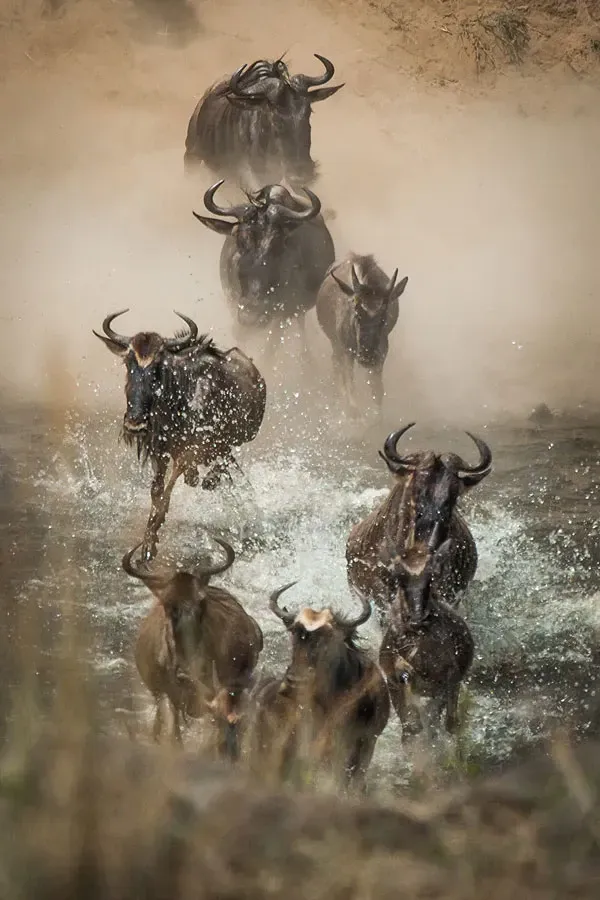
The Great Wildebeest Migration is the world’s largest land-based wildlife movement. Each year, more than two million wildebeest, zebras, and gazelles follow a circular route through the Serengeti–Mara ecosystem in search of fresh grazing.
This Safarigo guide breaks down when to go, where to be, and how to plan, so you can design a migration safari that matches the animals’ real movements—not guesswork.
Great Wildebeest Migration – Quick Answer
The Great Wildebeest Migration is a year-round wildlife movement across Tanzania’s Serengeti and Kenya’s Masai Mara. Calving occurs in the southern Serengeti from January to March, herds move north through the central and western Serengeti from April to June, and river crossings typically happen in the northern Serengeti and Masai Mara between July and October. The best time to visit depends on whether you prioritize predator action, river crossings, fewer crowds, or lower costs.
Quick Navigation: Jump to a Section
- When is the Best Time to Go? (River crossings vs calving explained)
- Month-by-Month Migration Map (Track the herds by season)
- Masai Mara vs Serengeti (Which country suits your travel style?)
- Top Migration Highlights (What most travelers actually want to see)
- Safari Logistics (Visas, flights & packing essentials)
1. When is the Best Time to See the Migration?
If you want the highest probability of river crossings, plan for August or September in the Northern Serengeti or Masai Mara.
The migration is a fluid, year-round event dictated by rainfall. While the animals are always moving, your experience depends entirely on your timing.
- Best for River Crossings: July to October (Masai Mara and Northern Serengeti).
- Best for Predator Action: January to March (Southern Serengeti Calving Season).
- Best for Photography: November to December (The "Short Rains" in the Central Serengeti).
2. The Migration Timeline: Where are the Herds?
| Months | Location | What is Happening? |
|---|---|---|
| January – March | Southern Serengeti (Ndutu) | Calving Season: 8,000 calves born daily. High predator activity (Lions/Cheetahs). |
| April – May | Central & Western Serengeti | The "Long Rains." Herds move north through the Grumeti region. |
| June – July | Northern Serengeti | Herds gather at the Grumeti and Mara Rivers, preparing for crossings. |
| August – October | Masai Mara (Kenya) | River Crossings: The iconic, high-drama crossings of the Mara River. |
| November – December | Moving South | The herds return to the Serengeti to start the cycle again. |
January–March: Ideal for photographers and families due to predictable predator activity.
August–October: Best for first-time travelers chasing iconic river crossings.
3. Masai Mara vs. Serengeti: Where Should You Book?
Quick Decision Guide
- First safari → Serengeti
- Short trip (≤5 days) → Masai Mara
- Fewer crowds → Private conservancies
- Calving season → Southern Serengeti
The Serengeti National Park (Tanzania)
Pros: Hosts the migration for 9 months of the year; incredible vastness; home to the Ndutu calving season.
Best For: Travelers who want a deep dive into the ecosystem and those visiting between January and June.
The Masai Mara (Kenya)
- Pros: Smaller area makes it easier to find the herds; famous for the "Great River Crossings"; incredible density of big cats.
- Best For: Short-duration safaris and those visiting between August and October.
4. Top 5 Migration Highlights You Can't Miss
1. The Mara River Crossing: Nature’s ultimate drama as wildebeest brave crocodiles and steep banks.
2. The Calving Season: Witnessing thousands of newborn wildebeest taking their first steps in the Southern Serengeti.
3. Big Cat Encounters: The migration provides a feast for lions, leopards, and hyenas—expect high-octane hunts.
4. Hot Air Balloon Safari: The only way to truly appreciate the sheer scale of the 2-million-strong columns of animals.
5. The Silent Trek: Hearing the constant, low "gnu" grunt of the herds under a starlit African sky.
5. Safari Logistics & Planning
Essential Travel Documents
Kenya eTA: All travelers to Kenya (including the Masai Mara) must apply for an Electronic Travel Authorization (eTA) at least 72 hours before departure.
Tanzania Visa: Required for most nationalities. Can be obtained online or upon arrival at major airports such as JRO or DAR.
Flights
To Kenya: Fly into Jomo Kenyatta International (NBO), then take a bush plane to the Masai Mara.
To Tanzania: Fly into Kilimanjaro International (JRO) for the Northern Circuit or Arusha (ARK) for local bush flights.
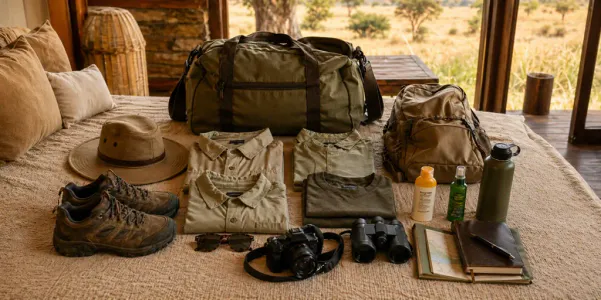
What to Pack
- Neutral Colors: Khaki, olive, and tan (Avoid blue/black as they attract tsetse flies).
- Layers: Early morning drives are freezing; mid-day is hot.
- Binoculars: A quality pair (8x42) is essential for spotting river crossings from a distance.
Ready to witness the Great Migration?
Safarigo connects you with vetted local safari operators who track the herds in real time and design itineraries around actual migration movement—not fixed calendars.
FAQ: Great Wildebeest Migration (2026–2027)
What month has the best chance of river crossings?
August and September offer the highest probability of witnessing dramatic Mara River crossings. During these months, large herds concentrate in the Northern Serengeti and Masai Mara, increasing crossing frequency. July and October can also produce crossings, but activity is less predictable.
Are river crossings guaranteed?
No. River crossings are never guaranteed. The migration is driven by rainfall, grass growth, and herd behavior—not calendars. Wildebeest may gather at a river for hours or days before crossing, and some days have no crossings at all. Choosing experienced local guides significantly improves your chances.
Is a migration safari suitable for kids?
Yes, migration safaris are suitable for children, especially during predictable seasons like the calving period (January–March) in the Southern Serengeti. For families, longer stays, private vehicles, and lodges inside or near migration areas provide flexibility and comfort.
How far in advance should I book a migration safari?
For peak migration periods (July–October), book 6–12 months in advance, especially for camps near river crossings. For calving season safaris (January–March), 3–6 months is usually sufficient. Booking early ensures access to the best-located camps and experienced guides.
This guide is updated annually based on real migration patterns reported by local safari operators in Tanzania and Kenya.
.jpg_1784962360143.webp?color=cac6b6%2C908d57&width=601&height=376)

.jpg_1784965072251.webp?color=c3cbcd%2C302c10&width=601&height=376)