
A Comprehensive Guide to the Giants of the Savannah
Many consider Tanzania to be the premier location on the planet for an authentic safari experience, home to roughly 20% of Africa’s large mammal population. This guide covers the "Big Five" and the other essential species you will encounter on the Northern and Southern circuits.
🏆 The Big Five
Historically, the phrase "Big Five" was coined by hunters to categorize the most challenging African animals to hunt on foot. In a modern context, however, these animals have transitioned from hunting targets to the most sought-after subjects for wildlife observation and photography.
1. African Lion (Simba)
Status: Very common, especially in Serengeti, Ngorongoro, and Tarangire. Most active during dawn, dusk, and night. Often seen panting under trees or atop rocks in Serengeti. Most prevalent in the Northern Circuit.
Top Locations: The Serengeti is known for its large prides, while Ngorongoro Crater offers high lion densities. Lions are also frequently seen in Tarangire.
Typical Behavior: Lions are primarily active at dawn, dusk, and night. They are often found panting in the shade of Acacia trees or resting atop kopjes in the Serengeti.
2. African Elephant (Tembo)
- Status: Very Common, especially in both Northern and Southern Circuits.
- Top Locations: Tarangire is renowned for its large herds, while Ruaha and the Serengeti are also reliable places to see elephants.
- How to Identify: In the Ngorongoro Crater, observe the "Super Tuskers," old bulls with tusks nearly touching the ground.
3. African Buffalo (Nyati)
- Status: Extremely Common, particularly in the Northern and Western Circuits.
- Top Locations: Large herds of buffalo are commonly seen in Ngorongoro, Serengeti, and especially Katavi, where thousands gather.
- Noteworthy Trait: The buffalo’s unpredictable and protective nature often makes them the most dangerous of the Big Five.
4. Leopard (Chui)
- Status: Widespread but Elusive, especially within the Northern Circuit.
- Top Locations: Leopards are regularly sighted in the Serengeti’s Seronera Valley and Lake Manyara.
- Sightings Tip: Look upward—leopards often rest draped over sausage tree or yellow-barked acacia branches during the day, guarding their kills from hyenas.
5. Black Rhinoceros (Kifaru)
- Status: Critically Endangered; mainly found in the Northern Circuit.
- Top Locations: Ngorongoro Crater remains the most reliable place to spot black rhinos, with occasional sightings near the Moru Kopjes of the Serengeti.
- How to Identify: The black rhino is distinguished by its hooked upper lip, adapted for browsing shrubs. White rhinos are not native to Tanzania.
🦒 The "Big Nine" (Other Icons)
Beyond the Big Five, Tanzania is home to several other iconic species.
| Animal | Best Location | Why it's Special |
|---|---|---|
| Giraffe | Arusha NP / Serengeti | Tanzania's National Animal (Maasai Giraffe). |
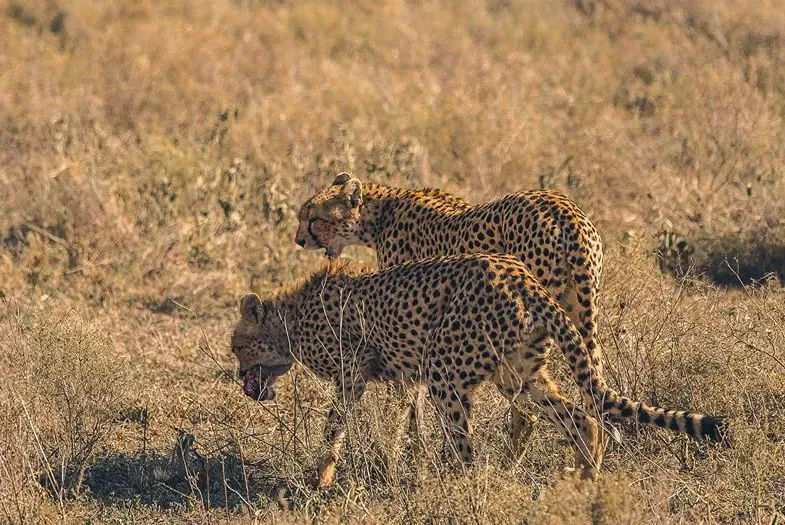
| Cheetah | Serengeti (Short grass plains) | The world's fastest land animal; thrives in open plains. |
| Hippopotamus | Selous / Katavi | Found in "hippo pools" by the hundreds. |
| Zebra | Serengeti / Ngorongoro | Famous for their role in the Great Migration. |
🐘 Regional Wildlife Specialities
The Northern Circuit (Serengeti, Ngorongoro, Manyara, Tarangire)
- The Great Migration: Over 1.5 million Wildebeest and 200,000 Zebras are moving in a clockwise circle.
- Tree-Climbing Lions: Unique to Lake Manyara and parts of the Serengeti.
- Flamingos: Thousands of Lesser Flamingos carpet the alkaline lakes (Lake Natron/Manyara).
The Southern & Western Circuit (Selous, Ruaha, Mahale)
- African Wild Dogs: Highly endangered; Selous (Nyerere NP) is one of the best places to see them.
- Chimpanzees: Found in the Mahale Mountains and Gombe Stream on the shores of Lake Tanganyika.
- Sable Antelope: Striking dark-coated antelopes found primarily in Ruaha.
📸 Safari Viewing Tips
1. Golden Hours: Wildlife is most active between 06:00–09:00 and 16:00–18:30.
2. Silence is Golden: When near a predator, keep voices to a whisper. Loud noises will cause animals to retreat.
3. Watch the Birds: Oxpeckers on a buffalo's back, or baboon alarm calls, often signal that a predator (like a leopard) is nearby.
4. Binoculars are Essential: Even if an animal is close, binoculars let you see details like the scars on a lion's face or a giraffe's eyelashes.
🗓️ Best Seasons for Viewing
- June to October (Dry Season): Animals congregate around water holes. This is the best time for general wildlife viewing and seeing the Big Five.
- January to February: The calving season in the Southern Serengeti. Thousands of wildebeest are born daily, attracting high predator action.

.jpg_1784962360143.webp?color=cac6b6%2C908d57&width=601&height=376)

.jpg_1784965072251.webp?color=c3cbcd%2C302c10&width=601&height=376)