
Great Wildebeest Migration – Quick Answer
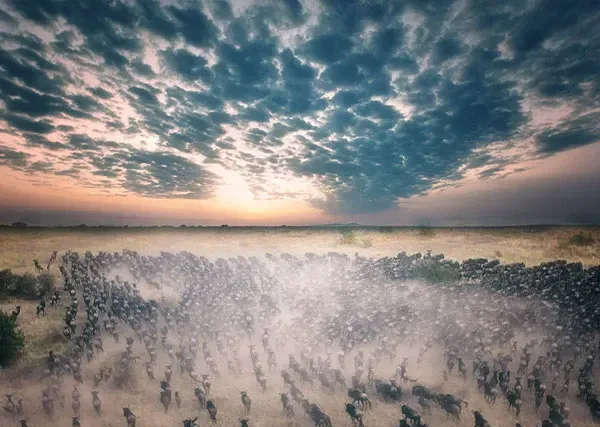
The Great Wildebeest Migration is a continuous journey across Tanzania’s Serengeti and Kenya’s Masai Mara. Calving occurs in the southern Serengeti (Jan–Mar), herds move north through the central and western Serengeti (Apr–June), and dramatic river crossings occur in the northern Serengeti and the Masai Mara (July–October).
Before diving into the details, let's clarify how to time your safari, navigate the logistics, and avoid common pitfalls—so you can enjoy a truly memorable experience.
1. Understanding the Migration Cycle (The Secret to Timing)
Many believe the migration only happens in July. In reality, it’s a year-round circular journey. Seeing the herds depends on timing and location.
The Calving Season (January – March)
- Location: Southern Serengeti (Ndutu), Tanzania.
This period is known as the Serengeti calving season, when the herds gather on the nutrient-rich short grass plains of Ndutu. Travelers specifically planning Ndutu calving season safaris come for intense predator action, open landscapes, and fewer crowds compared to peak river-crossing months.
- Highlight: Over 8,000 calves are born daily. This is the best time for predators to act, as lions, cheetahs, and hyenas prey on vulnerable young.
The Long Trek (April – June)
- Location: Central and Western Serengeti.
- Highlight: Herds head north. It’s the "Green Season," with lush scenery and lower prices.
The Mara River Crossings (July – October)
- Location: Northern Serengeti and Kenya’s Masai Mara.
This is the most famous stage of the migration, drawing travelers specifically for Northern Serengeti river crossings and Masai Mara river crossing safaris. While sightings are never guaranteed, staying close to the river for multiple nights dramatically increases your chances.
- Highlight: The iconic river crossing. Watch wildebeest face crocodile-infested waters—the migration’s peak.
2. Common Pitfalls: How to "Avoid the Traps."
Planning a migration safari can be complex. Here are common mistakes and how to avoid them:
Pitfall #1: Booking Too Late
The best lodges near the Mara River are often booked 9 to 12 months in advance. If you wait until the last minute, you will end up far from the action, requiring hours of daily driving.
Pitfall #2: Chasing the River Crossing Every Day
River crossings are unpredictable. You might wait 6 hours only for the wildebeest to turn back.
- Fix: Balance your itinerary. Spend a day or two at the river and the rest on game viewing.
Pitfall #3: Staying Only in National Reserves
The Masai Mara National Reserve gets crowded with vehicles during peak season.
- Fix: Book a lodge in a private conservancy (like Mara North or Olare Motorogi). Enjoy exclusivity, fewer crowds, and the chance for off-road or night drives—prohibited in the main park.
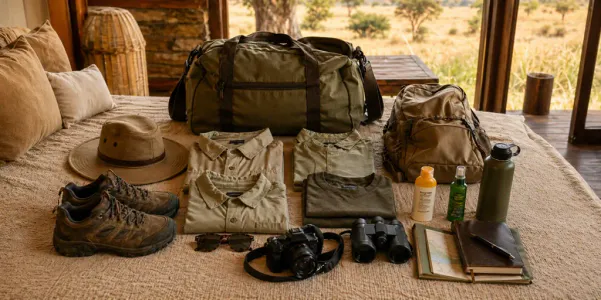
- Essential Packing List for Your Safari
Don't let poor preparation ruin your trip. Pack these essentials:
1. Layers (Neutral): Cold mornings, hot afternoons. No blue/black—attracts tsetse flies.
2. High-Quality Binoculars: Not all action happens right next to the vehicle.
3. Dust Protection: Use a scarf or buff for your face and a dry bag for camera gear.
4. Telephoto Lens: At least 300mm to 600mm for those professional-grade wildlife shots.
4. Why You Should Choose a "Mobile Camp."
If your primary goal is to be as close to the animals as possible, choose a Mobile Migration Camp. These camps are semi-permanent and move twice or thrice a year to remain within the herds' proximity. Unlike fixed luxury lodges, mobile camps offer an immersive, "under-canvas" experience that puts you in the heart of the wild.
5. Frequently Asked Questions (FAQ)
Is Kenya or Tanzania better for the migration?
Both. Tanzania holds the herds for about 9 months, while Kenya offers intense river crossings during peak (Aug–Sep).
Can I see the Big Five during the migration?
Absolutely! While wildebeest dominate the migration, Serengeti and Masai Mara offer year-round sightings of the Big Five: lion, leopard, elephant, buffalo, and rhino.
What is the average cost of a migration safari?
Prices range from $400 per person/night (mid-range) to $1,500+ (ultra-luxury).
What month has the best chance of river crossings?
August and September offer the best chance for Mara River crossings, as the wildebeest herd in the Northern Serengeti and Masai Mara move due to dry-season grazing. However, crossings can begin as early as late July and continue into October, depending on rainfall. Timing improves your odds, but doesn’t guarantee seeing a crossing.
Are river crossings guaranteed?
No. River crossings are never guaranteed. They are spontaneous events affected by weather, river levels, predators, and herd behavior. Wildebeest may gather at the river for hours or days before crossing—or retreat without crossing.
For the best chance, plan a multi-day stay near the river and split your time between watching for crossings and game drives.
Is a migration safari suitable for kids?
Yes, migration safaris can suit children, depending on age and safari style. Children aged 6–8 and older generally enjoy migration safaris when itineraries include:
- Shorter game drives
- Family-friendly lodges or private conservancies
- Flexible schedules and private vehicles
Mobile migration camps may restrict ages and aren’t ideal for very young kids. Families benefit most from private safaris over group tours.
How far in advance should I book?
For peak season (July–September), book 12–18 months ahead. Top camps near crossings fill up quickly.
For calving season (January–February) or the shoulder months, reserving your spot four to six months ahead typically provides enough availability. Last-minute availability is rare during peak season and often comes with higher costs or less optimal lodge locations.
With all this information, you might wonder which part of the migration is right for you.
First-time safari → Central Serengeti + Ndutu
River crossings → Northern Serengeti or Mara North
Fewer crowds → Private conservancies
Best value → April–May in Western Serengeti
When you’re ready to plan your adventure, remember these final tips to tailor your experience.
The Great Migration is nature’s most dramatic event. By understanding the cycle and avoiding the crowds in private conservancies, you can turn a standard vacation into a legendary adventure.
Because migration timing varies with rainfall, most travelers work with local safari specialists who track herds in real time and adjust itineraries.
.jpg_1784962360143.webp?color=cac6b6%2C908d57&width=601&height=376)

.jpg_1784965072251.webp?color=c3cbcd%2C302c10&width=601&height=376)