
Why Amboseli National Park is a Must-Visit
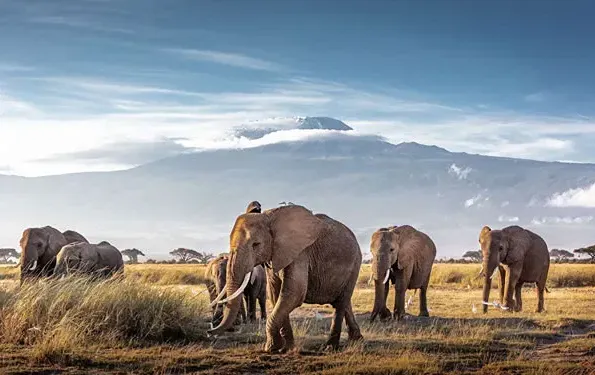
While the Maasai Mara features rolling plains and the Great Migration, Amboseli is marked by Mount Kilimanjaro. Africa’s highest peak creates a dramatic backdrop for wildlife photography.
Amboseli is globally renowned as the best place in Africa to get close to free-ranging elephants. The park's unique hydrology—fed by underground springs from Kilimanjaro—creates lush emerald-green swamps in an otherwise arid landscape, drawing massive herds of "Big Tuskers."
1. Top Wildlife Highlights in Amboseli
The Iconic "Big Tuskers"
Amboseli is home to some of the oldest and largest elephants in Africa. Because of long-term research projects like the Amboseli Elephant Research Project, these herds are unusually habituated to vehicles, allowing for intimate and peaceful encounters.
The Big Five and Beyond
Lions and Leopards: Often found lounging in the acacia woodlands or patrolling the edges of the swamps.
Cheetahs: The open, flat lake beds of Amboseli provide the perfect hunting ground for these high-speed predators.
Birdlife: The swamps (Enkongo Narok and Olokenya) are a haven for over 400 bird species, including flamingos, pelicans, and kingfishers.
The "Amboseli Crossing": Watch for huge dust clouds on the dry horizon; they often signal a herd of elephants or zebras crossing the dry bed of Lake Amboseli.
2. Best Time to Visit Amboseli
Dry Season (June to October / January to February)
This is the Peak Season for wildlife viewing. As the park dries out, animals congregate around the permanent swamps. The skies are generally clear, providing the best views of Mount Kilimanjaro (especially at dawn and dusk).
Wet Season (November to December / March to May)
Also known as the Green Season. The dust settles, and the park turns a vibrant green. While wildlife may disperse, this is the best time for birdwatching and avoiding the crowds. You may also find lower rates at luxury lodges.
3. How to Get the Perfect Kilimanjaro Photo
To capture the classic shot of elephants walking with the mountain in the background, timing is everything:
1. Start at Sunrise: Kilimanjaro is notoriously "shy." Clouds usually cover the peak by 9:00 AM. Be at the park gate the moment it opens.
2. Observation Hill: The only place in the park where you can get out of your vehicle. It offers a panoramic view of the swamps and the mountain—perfect for wide-angle landscape shots.
4. Where to Stay: Accommodation & Pricing
Amboseli offers a range of stays from high-end conservancy camps to budget-friendly options outside the gates. Prices vary significantly between peak and low seasons.
| Tier | Recommendation | Est. Price (Per Night) | Highlight |
|---|---|---|---|
| Ultra-Luxury | Tortilis Camp | $600 – $950 | Set in a private conservancy; peerless Kilimanjaro views and walking safaris. |
| Mid-Range/Classic | Ol Tukai Lodge | $300 – $500 | Located in the heart of the park; famous for "elephant watching from your front porch." |
| Mid-Range | Amboseli Serena | $250 – $450 | Inspired by Maasai manyattas; excellent service and eco-conscious operations. |
| Budget/Tented | Kibo Safari Camp | $150 – $250 | Located just outside the main gate; comfortable ensuite tents and a large pool. |
5. Park Entry Fees and Logistics
Amboseli is managed by the Kenya Wildlife Service (KWS). As of 2024-2026, the park operates on a cashless system.
Park Entry Fees (Non-Resident): Adults: ~$100 USD (Peak) / ~$80 USD (Low). Children/Students: ~$35 USD.
Opening Hours: 06:00 AM to 06:00 PM daily.
Permits: No special permits are required for standard game drives, but professional film crews or drone operators must obtain prior clearance from KWS and the Film Licensing Board.
Payment: Use the eCitizen portal for pre-payment or pay via M-Pesa/Credit Card at the gate. Cash is not accepted.
6. Transport: Getting to Amboseli
Guided Tours from Nairobi: Most travelers book a 3-day guided safari. A professional driver-guide handles the navigation and wildlife spotting.
Fly-in Safaris: Small planes fly from Nairobi’s Wilson Airport (WIL) to Amboseli airstrip (approx. 35-40 mins). This is the fastest but most expensive option.
Self-Drive: Possible via the Nairobi-Arusha road (C103). A 4WD vehicle is mandatory during the rainy season and highly recommended year-round due to the fine volcanic dust and corrugations.
Train (SGR): You can take the Madaraka Express from Nairobi to Emali station, then arrange a 1.5-hour transfer to the park.
7. Health & Safety Tips
Malaria: Amboseli is a malaria-risk zone. Consult your doctor regarding prophylactics, and use a repellent containing DEET, especially at dusk.
Dust & Respiratory Health: The volcanic ash ("alkali dust") is extremely fine. If you have asthma or allergies, wear a buff/mask during game drives.
Wildlife Safety: Never exit your vehicle except at designated points, such as Observation Hill. Elephants in Amboseli are habituated but can be protective of their young.
Sun Protection: Being near the equator and at a high altitude means the sun is intense. Use high-SPF sunscreen and stay hydrated.
8. Summary: Why Choose Amboseli?
If your safari dream involves seeing huge herds of elephants and the roof of Africa, Amboseli is unbeatable. It is a photographer's paradise and offers a much more compact, easily navigable experience than the larger parks.
.jpg_1784962360143.webp?color=cac6b6%2C908d57&width=601&height=376)

.jpg_1784965072251.webp?color=c3cbcd%2C302c10&width=601&height=376)